Get a Free SEO Audit for your Phoenix business. Request yours →
S

Keyword Research Services in Phoenix That Find the Searches Your Customers Use

Every page on your website should target a keyword your customers search when they need your service. Not a guess. Not a topic someone suggested in a meeting. A keyword with verified search volume, defined search intent, and a realistic path to ranking. We deliver keyword research for Phoenix businesses that connects search data to content strategy, site architecture, and revenue outcomes.

  • Search intent classification, keyword clustering, and competitor keyword gap analysis
  • Keyword mapping tied to site architecture, content plan, and internal linking strategy
  • 500+ five-star Google reviews across 20 years of search optimization
keyword research dashboard or keyword map visualization
500+ Five-Star Google Reviews | Google Partner | BBB Accredited, A+ Rating

You're Targeting Keywords. They're the Wrong Ones.

The Problem

  • Your website targets keywords based on what your team thinks customers search, not what they actually search. The result is pages optimized for terms with low search volume, wrong search intent, or keyword difficulty that's unrealistic given your site's current authority. You invest in content and SEO without the data that tells you which efforts will produce returns.
  • Your keyword list is a flat spreadsheet of terms with no structure. Keywords aren't grouped by search intent, clustered by topic, or mapped to specific pages on your site. Multiple pages compete for the same keyword, cannibalizing each other's rankings. There is no connection between your keyword research and your site architecture or content plan.
  • You don't know which keywords your competitors rank for that you don't. Without a competitor keyword analysis, you're building your SEO strategy in isolation. Your competitors have already identified and captured keyword opportunities that should be driving traffic to your site.

The Solution

  • We conduct keyword research using enterprise SEO tools that provide verified search volume, keyword difficulty scores, and competitive data for your specific industry in the Phoenix market. Every keyword is validated against real search demand before it enters your strategy.
  • We classify every keyword by search intent, informational, navigational, commercial, or transactional, and cluster related keywords into topic groups. Each cluster maps to a specific page type on your site: service pages for transactional intent, blog posts for informational queries, and pillar pages for broad topic authority. This keyword mapping creates the blueprint for your site architecture and content strategy.
  • We run a competitor keyword gap analysis that identifies every keyword your competitors rank for that your site doesn't target. These gaps represent qualified traffic and potential customers flowing to competitors instead of you. The gap analysis prioritizes opportunities by search volume, keyword difficulty, and revenue potential.

SEO Keyword Research in Phoenix, Built for Strategy and Revenue

Search Intent Classification and Keyword Clustering

A keyword list without search intent classification is a spreadsheet, not a strategy. We categorize every keyword by what the searcher wants when they type it: informational queries from people researching a topic, commercial queries from people comparing options, and transactional queries from people ready to take action. We then cluster related keywords into topic groups based on semantic similarity, so each group maps to a single page instead of spreading related terms across competing pages. This keyword clustering is the foundation that connects keyword research to your content strategy and site architecture.

Competitor Keyword Gap Analysis

Your competitors rank for keywords you don't know about. We analyze 3 to 5 of your direct competitors using enterprise SEO tools, identifying every keyword they rank for that your site doesn't target. The keyword gap analysis reveals the content and pages your competitors have built to capture traffic you're missing. We filter these gaps by search volume, keyword difficulty, and commercial value to prioritize the opportunities that connect to your revenue goals. This competitor keyword analysis turns your competitors' SEO investment into your strategic advantage.

Keyword Mapping to Site Architecture

Keyword research that doesn't connect to your website structure produces reports that sit in a folder. We map every keyword cluster to a specific page on your site, or identify where new pages need to be created. Service pages get transactional keywords. Blog posts get informational keywords. Pillar pages get broad topic keywords that anchor topic clusters. The keyword mapping includes an internal linking strategy that connects related pages and distributes authority across your site. This is the step where keyword research becomes a content strategy and a site architecture plan.

SEO Keyword Analysis for Phoenix Businesses That Need Local and National Visibility

Keyword research for Phoenix businesses requires local market context that national keyword tools don't provide. Search behavior varies across Scottsdale, Tempe, Mesa, Chandler, Gilbert, and Ahwatukee. A homeowner in Paradise Valley searches differently than one in Surprise. We use our Phoenix Search Territory™ mapping to identify the neighborhood-level keyword variations, local modifiers, and service area terms that drive the highest-value traffic to Phoenix businesses. Generic keyword research misses these local signals entirely.

We conduct keyword research for law firms, dental practices, home service contractors, medical offices, real estate professionals, e-commerce brands, and B2B companies across the Phoenix metro area. Each industry has its own keyword landscape with different search volumes, competitive densities, and intent patterns. A personal injury attorney competes for different keywords at different difficulty levels than a commercial plumber. We build keyword strategies matched to your specific industry, competitive landscape, and growth goals.

Over 20 years and 1,000+ Phoenix websites ranked, we've built a dataset of keyword performance patterns in this market. We know which keyword types produce qualified leads for Phoenix service businesses, which long-tail variations capture buyers ready to act, and which broad terms require pillar page strategies to compete. Our keyword research company in Phoenix delivers strategic keyword analysis, not raw data exports.
Start Your Keyword Research →
keyword research process or competitive analysis dashboard
Phoenix neighborhood map or local search context

Phoenix Businesses. Data-Driven Keyword Strategy. Measurable Growth.

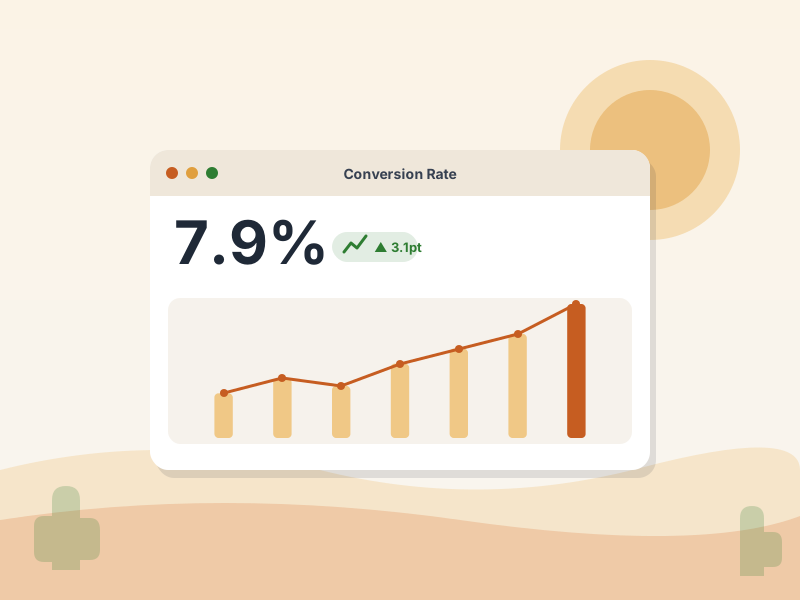
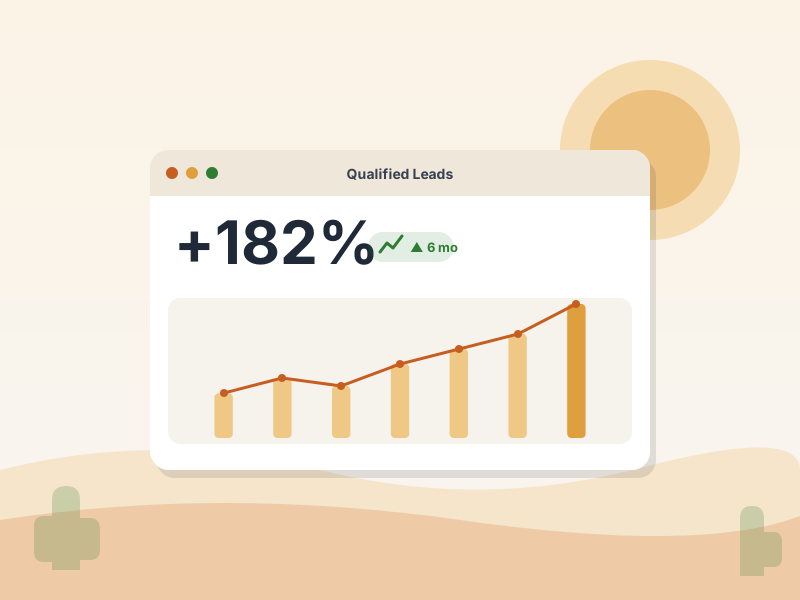
PHOENIX LAW FIRM | KEYWORD-DRIVEN ORGANIC GROWTH results
PHOENIX LAW FIRM | KEYWORD-DRIVEN ORGANIC GROWTH

A Phoenix-based law firm wanted to attract more potential clients through organic search instead of relying on paid advertising. We conducted comprehensive keyword research across practice area terms, identified gaps in their keyword coverage compared to competing firms, and built a content strategy around the findings. The implementation included practice area page enhancements, content development targeting high-intent legal queries, internal linking, local SEO optimization, and Google Business Profile optimization. Over the following months, the firm achieved stronger keyword rankings, increased organic visibility, and a steady rise in qualified consultation requests.

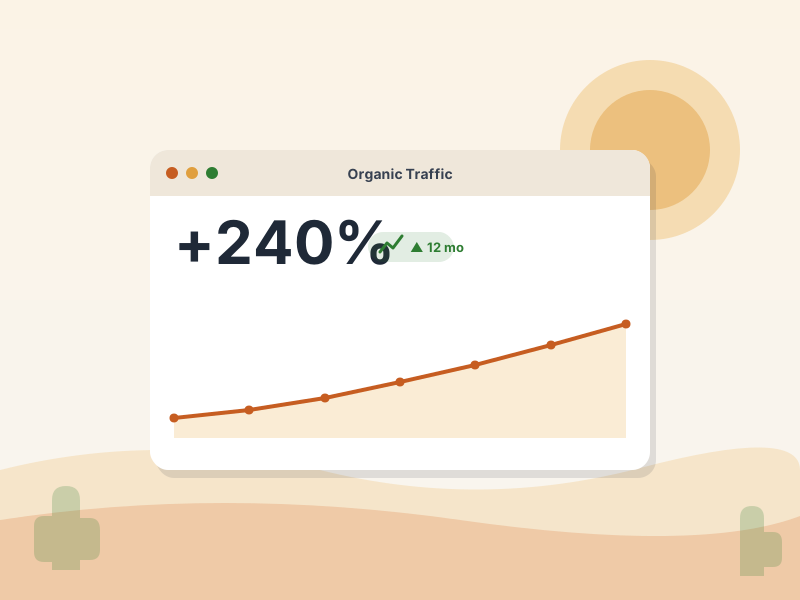
PHOENIX DENTAL PRACTICE | KEYWORD STRATEGY FOR PATIENT ACQUISITION results
PHOENIX DENTAL PRACTICE | KEYWORD STRATEGY FOR PATIENT ACQUISITION

A dental clinic in Phoenix needed to attract new patients from nearby communities. Our keyword research identified high-value patient-intent terms the practice wasn't targeting and location-specific keyword opportunities in surrounding neighborhoods. We built a content plan around these findings, including location-specific service pages, patient education content, local citation management, Google Business Profile optimization, and on-page SEO improvements. The practice experienced sustained organic traffic growth, improved rankings for competitive dental terms, and increased appointment enquiries.

What Phoenix Business Owners Say

“Our website was getting visitors, but very few of them were turning into actual customers. Their SEO strategy focused on attracting people who were ready to buy, and the difference was noticeable within a few months. We now receive more consistent enquiries, and they keep us updated on what they're doing and why it matters.”
Michael, Arcadia
“We wanted an SEO company that would treat our business like a long-term partner instead of making unrealistic promises. They improved our local search visibility, optimized our website, and helped us rank for the services that matter most. The increase in quality leads has exceeded our expectations.”
Sarah, Desert Ridge
“From the beginning, the team was honest, responsive, and focused on building sustainable results rather than quick fixes. Our rankings steadily improved, more customers started finding us through Google, and we've become far less dependent on paid advertising. Working with them has been one of our best marketing decisions.”
David, Ahwatukee Foothills

Why Phoenix Businesses Choose Our Keyword Research Agency

  Best ChoiceSEO COMPANY IN PHOENIX ARIZONA GENERAL SEO AGENCIES DIY / FREE TOOLS ONLY
Search intent classification for every keyword
Keyword clustering into topic groups Varies
Competitor keyword gap analysis Varies
Phoenix local keyword research with neighborhood targeting
Keyword mapping to site architecture and content plan
Prioritization by revenue potential, not just search volume

Frequently Asked Questions About Keyword Research in Phoenix

How much does keyword research cost?
Keyword research pricing depends on your industry, the number of service categories or product lines, and whether competitor gap analysis is included. A keyword research project for a Phoenix service business with a focused service area typically costs between $1,000 and $3,000. Larger projects with multiple service lines, e-commerce catalogs, or competitive gap analysis across several competitors range from $3,000 to $5,000. Ongoing keyword strategy as part of a monthly SEO program is included in our SEO retainer rather than priced separately.
What is the difference between keyword research and content strategy?
Keyword research identifies the search terms your customers use and evaluates their search volume, difficulty, and intent. Content strategy takes those findings and builds a plan: which pages to create, in what order, how they connect through internal linking, and how each piece supports your business goals. Keyword research is the data input. Content strategy is the plan that turns that data into pages that rank and convert. We deliver both, and the keyword research always comes first because it determines what the content strategy should target.
What is search intent, and why does it matter?
Search intent is what a person wants when they type a query into Google. Informational intent means they want to learn something. Commercial intent means they're comparing options. Transactional intent means they're ready to take action, like calling a business or making a purchase. Matching your page to the right search intent is one of the strongest ranking factors. A blog post won't rank for a transactional query, and a service page won't rank for an informational one. We classify every keyword by intent so each one maps to the right page type on your site.
What is keyword clustering, and how does it help SEO?
Keyword clustering groups related keywords by semantic similarity so that one page can target an entire cluster instead of a single keyword. For example, instead of creating separate pages for five similar variations of the same search query, you create one strong page that ranks for all of them. Clustering prevents keyword cannibalization, where multiple pages on your site compete against each other for the same terms. It also forms the foundation of topic cluster architecture, where clusters map to pillar pages and supporting content.
How often should keyword research be updated?
We recommend a full keyword research refresh every 6 to 12 months. Search behavior changes, competitors publish new content, and new keyword opportunities emerge as your site builds authority. Quarterly reviews of your keyword performance, including which keywords gained or lost rankings and where new gaps have appeared, keep your SEO strategy responsive. Keyword research is not a one-time project. It's an ongoing input that shapes your content calendar, your site architecture decisions, and your competitive positioning.
Can I do keyword research with free tools?
Free tools like Google Keyword Planner and Google Search Console provide real search data and are a reasonable starting point. The limitation is what they don't show: competitor keyword strategies, content gap opportunities, keyword difficulty scores calibrated to your domain's authority, and search intent classification. Professional keyword research uses enterprise tools like Ahrefs and Semrush alongside manual analysis to produce a prioritized keyword map, not a raw list. The difference is the interpretation, clustering, and strategic application that turns data into a plan.

Your Customers Are Searching. Do You Know Which Keywords They Use?

Every keyword you miss is a customer your competitor captures. We've conducted keyword research for over 1,000 Phoenix businesses across 20 years of search engine optimization work. The keyword research consultation is free, and we'll show you the search terms, competitor gaps, and keyword clusters your site should be targeting this quarter.

Meet our Phoenix SEO team